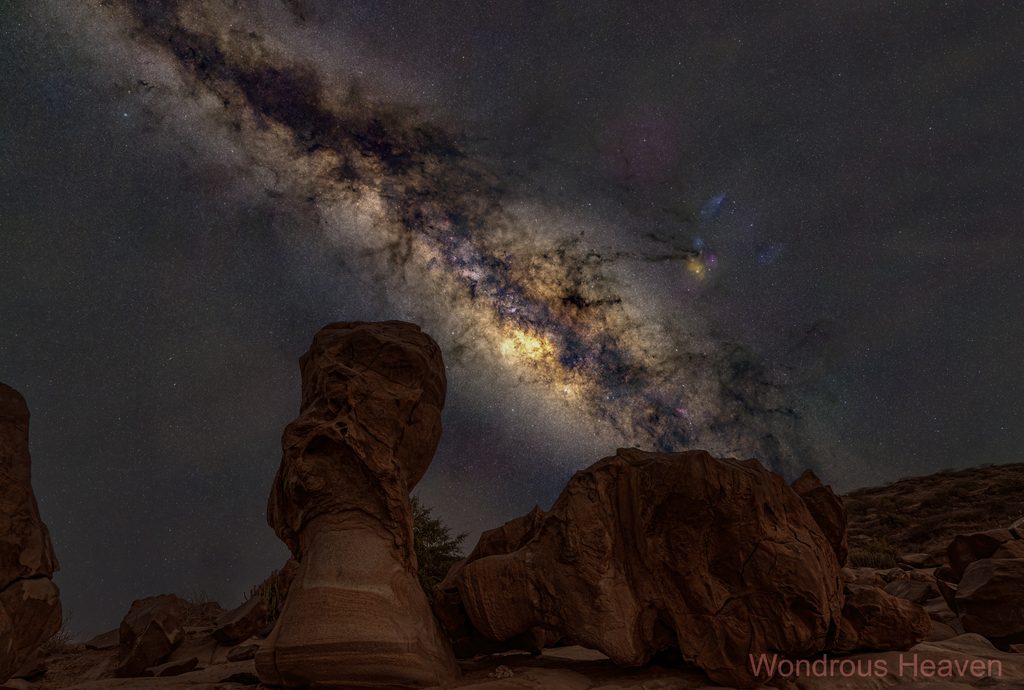
The night sky offers far more than a single Milky Way photograph—and during Milkyway Saga, you get to explore several creative ways of capturing it.
Learn to create stunning untracked Milky Way photographs, where careful planning, composition and camera settings allow you to capture the night sky using a stationary tripod.
Then take things further with tracked Milky Way photography, learning how a star tracker can dramatically change what you can capture and how to approach longer exposures and deeper night-sky images.
You will also explore Milky Way panoramas, learning how to capture and stitch multiple frames to create expansive compositions that showcase both the immense scale of the sky and the landscape beneath it.
And when the stars become the subject of motion, you’ll learn star trail photography—from planning and capturing the sequence to processing the individual frames and creating the final star-trail image.
CAPTURE THE NIGHT IN MOTION

The night sky isn’t static. It moves, rotates and transforms—and Milkyway Saga teaches you how to capture that movement.
Along with star trails, you will learn the fundamentals of Milky Way timelapse photography—from planning and shooting a sequence to understanding the considerations that go into creating a smooth, compelling night-sky timelapse.
Whether you’re creating long sweeping trails across the sky or compressing hours of celestial movement into a few seconds, you’ll learn how to turn the passage of time into an image or sequence.
FROM RAW FRAMES TO FINAL IMAGE
Capturing the photograph is only half the journey.
Milkyway Saga covers the processing and editing of the images you capture during the workshop—including Milky Way photographs, tracked images, panoramas, star trails and timelapses.
You’ll learn how to work with your data, bring out detail and colour, balance the sky with the foreground, combine multiple exposures where required, and turn your captured frames into finished photographs.
The aim isn’t simply to give you a set of steps to follow.
It is to help you understand why an image needs a particular treatment, so that you can make better processing decisions and develop your own style.